
Home › Calculators › First-Year Cat Cost
First-Year Cat Cost Calculator
Cats are cheaper than dogs — but not as cheap as their reputation suggests. A well-kept indoor cat costs about $2,560 in year one, and the cheapest responsible setup still runs close to $1,500 once vet essentials are included. Use the calculator below, then read why the range is so wide.
Your dog
Prices are 2025 US national ranges. Vet fees run 20–40% higher in major coastal cities and lower in rural areas.
Your first-year estimate
| One-off costs (year one only) | |
| Adoption fee / purchase price | $900 |
| Spay / neuter surgery | $375 |
| First vet visits & puppy vaccine series | $350 |
| Microchip & licence | $65 |
| Starter supplies (crate, bed, leash, bowls) | $300 |
| One-off subtotal | $1,990 |
| Everyday costs (every year) | |
| Food | $720 |
| Routine vet care & boosters | $300 |
| Flea, tick & heartworm prevention | $240 |
| Training classes | $250 |
| Grooming | $300 |
| Toys, treats & replacement supplies | $300 |
| Everyday subtotal / year | $2,110 |
| FIRST-YEAR TOTAL | $4,100 |
From year two, budget roughly the “everyday costs” subtotal per year. Over a full lifetime the total is far bigger — see the Lifetime Cost Estimator.
Your cat
Indoor cats cost less in prevention and live longer on average — the single biggest money lever in cat ownership.
Your first-year estimate
| One-off costs (year one only) | |
| Adoption fee / purchase price | $350 |
| Spay / neuter surgery | $200 |
| First vet visits & kitten vaccine series | $275 |
| Microchip | $50 |
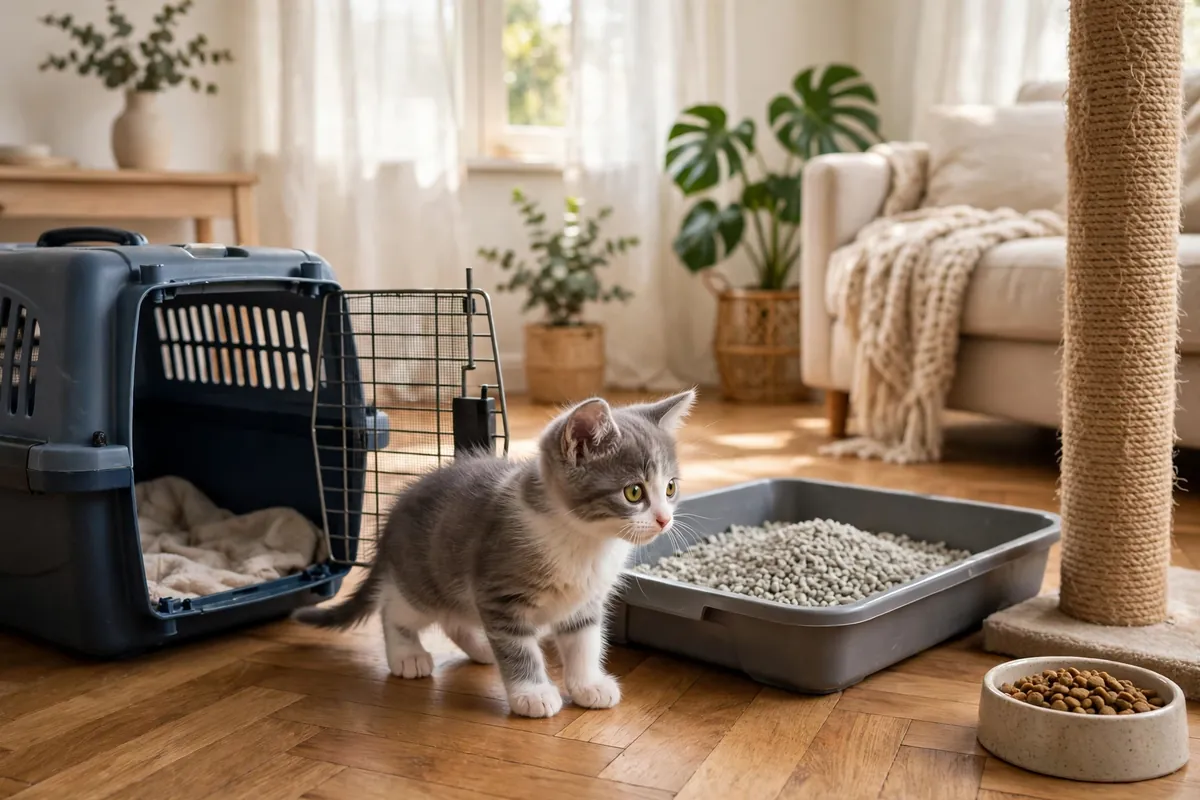
| Starter supplies (carrier, litter setup, scratcher) | $260 |
| One-off subtotal | $1,135 |
| Everyday costs (every year) | |
| Food | $540 |
| Litter | $350 |
| Routine vet care & boosters | $275 |
| Parasite prevention (indoor) | $60 |
| Toys & supplies | $200 |
| Everyday subtotal / year | $1,425 |
| FIRST-YEAR TOTAL | $2,560 |
From year two, budget roughly the “everyday costs” subtotal per year. Spread it monthly with the Monthly Pet Budget Calculator.
Your pet
This covers a typical adult year (year two onwards). For year one, use the dog or cat first-year calculators.
Your monthly budget
| Food | $60 |
| Vet & prevention | $45 |
| Grooming | $25 |
| Toys, treats & supplies | $25 |
| Boarding / walking / sitting reserve | $25 |
| Miscellaneous buffer | $15 |
| TOTAL PER MONTH | $195 |
The vet reserve line is the heart of this budget: it converts check-ups, vaccines and prevention into a monthly habit instead of a surprise bill.
Your pet
When you switch species, the lifespan resets to a typical value (dog 12, cat 15) — adjust it to your breed.
Lifetime estimate
| First year (one-off + everyday) | $4,100 |
| Everyday costs, years 2–12 ($2,110/yr) | $23,210 |
| Senior-care uplift (final years) | $540 |
| LIFETIME TOTAL | $27,850 |
Emergencies and end-of-life care can add $2,000–$8,000 across a lifetime. See how owners prepare in the emergency fund guide.
What this calculator is
This tool adds up the complete first year of owning a cat: the one-off costs of getting set up (adoption or purchase, spay/neuter, the kitten vaccine series, microchip, carrier, litter setup and scratchers) plus the recurring costs that start immediately (food, litter, routine vet care, parasite prevention and supplies). Cats have a reputation as the “cheap pet”, and compared with dogs they are — but the honest first-year figure for a well-kept indoor cat on a comfortable budget is around $2,560, and even the leanest responsible setup rarely comes in under $1,500 once vet essentials are included.
How it works
The lifestyle tier sets the adoption route and the quality of food and gear: shelter adoption and store-brand staples at Essential, a mid-range diet and sturdy equipment at Comfortable, a pedigree kitten and premium everything at Premium. Living situation adjusts prevention and vet risk — outdoor-access cats need broader parasite cover and face higher injury and infection rates. Every line uses a 2025 US price range; the headline is the sum of the midpoints, and the band beneath shows the low–high spread. Litter is the line that surprises people most: a single indoor cat goes through roughly $200–$550 of it a year, every year, for fifteen-plus years.
Worked example
The defaults above — a comfortable, indoor-only cat, no insurance — break down like this. One-off costs: adoption $350 + spay/neuter $200 + first vet visits and kitten vaccines $275 + microchip $50 + starter supplies $260 = $1,135. Everyday costs: food $540 + litter $350 + routine vet $275 + parasite prevention $60 + toys and supplies $200 = $1,425. First-year total: $2,560, about $213 a month. From year two the same cat costs the $1,425 recurring layer — roughly $119 a month, which is exactly the profile the monthly budget tool builds. Our guide to the cheapest healthy way to own a cat shows how the Essential tier cuts this to about $1,595 without cutting a single vet essential.
Limitations
- Emergencies excluded. The classic cat emergency — a urinary blockage in a male cat — runs $1,500–$4,000 with hospitalisation. See the emergency fund guide.
- Multi-cat homes don’t scale linearly. Litter and food do; vet minimums do too — but gear and some shared costs don’t.
- Pedigree prices vary enormously. Premium uses a $1,500 midpoint; some breeds (Bengals, Sphynx) run $2,500–$4,000+.
- Senior cats cost more at the vet. Twice-yearly check-ups and bloodwork from around age ten add $150–$300 a year.
Common mistakes
- Forgetting litter in the budget — it is a top-three annual cost for a cat, ahead of routine vet care at some tiers.
- Buying the cheapest food to save money, then paying it back in vet visits; the savings are small and the risk is real. The cheap-but-healthy guide shows where cutting is safe and where it isn’t.
- Skipping the microchip because the cat “never goes out” — indoor cats are the ones least able to find their way home when they slip out.
- One litter box for two cats. The rule is one per cat plus one spare; too few boxes is the top cause of house-soiling vet visits.
Cat cost FAQ
How much does it cost to spay a cat in 2025?
Spaying a female cat typically costs $150–$350 at a private clinic; neutering a male $100–$250. Low-cost clinics and shelter programmes often charge $50–$150. Full price lists are in our vet bills guide.
Is an indoor cat really cheaper?
Yes. Indoor cats need less parasite prevention, face far fewer injuries and infections, and live several years longer on average. In this calculator the difference is about $90 a year in prevention alone — the real saving is in avoided emergency bills.
What does a cat cost after the first year?
Roughly the recurring layer: about $815 a year at Essential, $1,425 at Comfortable and $2,390 at Premium (2025 midpoints), before emergencies and senior-care increases.
Are two cats twice the cost?
Not quite — expect about 1.7×. Food, litter and vet care scale per cat; carriers, furniture and your time don’t. But two emergency funds’ worth of risk does apply.
Keep reading
Go deeper with The Cheapest Healthy Way to Own a Cat, or see the 15-year picture in the Lifetime Cost Estimator.
Disclaimer: PawCosts provides cost guidance only, based on published 2025 US price ranges. It is not veterinary or financial advice, and your actual costs will vary by region and provider.