
Vet Bills Explained: What Vaccines, Spay/Neuter and Check-Ups Really Cost in 2025
Vet Bills Explained: What Vaccines, Spay/Neuter and Check-Ups Really Cost in 2025
Veterinary care is the cost new owners understand least and fear most — not because it’s unreasonable, but because nobody publishes a menu. Prices vary by city, by clinic and by the size of the animal on the table, so owners walk in blind and walk out shocked. This guide is the menu: the real 2025 US price ranges for the routine care every dog and cat needs, the surgery prices everyone asks about, and the emergency figures that explain why we keep telling you to build a fund. Every range here matches the assumptions inside our dog and cat cost calculators.
The routine layer: exams and vaccines
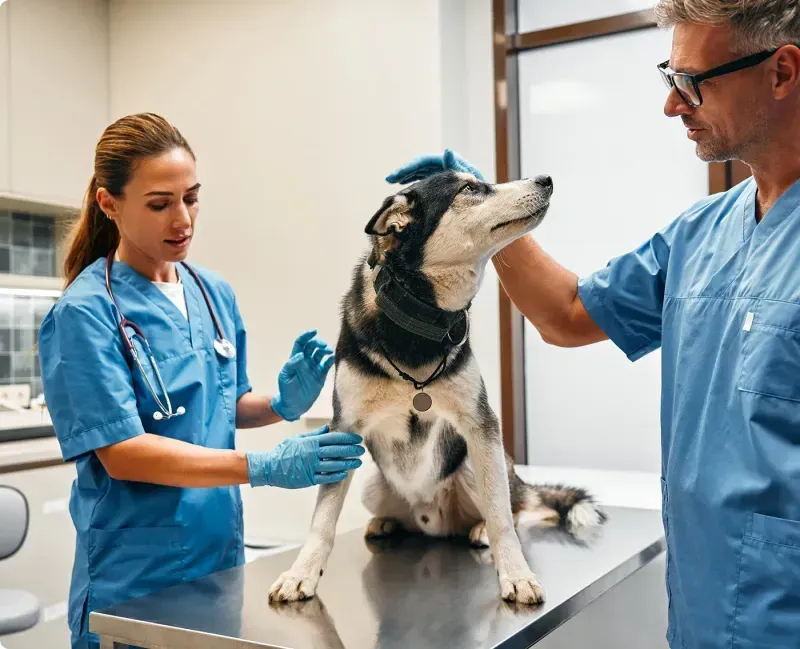
A standard wellness exam — the nose-to-tail check-up — runs $50–$100 at most US clinics in 2025, more in major metros. It’s the appointment that catches dental disease, heart murmurs and lumps while they’re still cheap problems, which is why skipping it to “save money” is the most expensive economy in pet ownership.
| Item | Typical 2025 US price |
|---|---|
| Wellness exam | $50 – $100 |
| Core vaccines, per dose (dog: DA2PP) | $25 – $50 |
| Core vaccines, per dose (cat: FVRCP) | $25 – $50 |
| Rabies vaccine | $20 – $40 |
| Puppy / kitten vaccine series (3 visits) | $200 – $400 |
| Microchip with registration | $40 – $75 |
| Flea, tick & heartworm prevention, per year (dog) | $180 – $360 |
| Flea & worm prevention, per year (cat) | $60 – $180 |
| Annual bloodwork panel, senior pet | $150 – $300 |
| Dental scale & polish under anaesthetic | $400 – $1,000 |
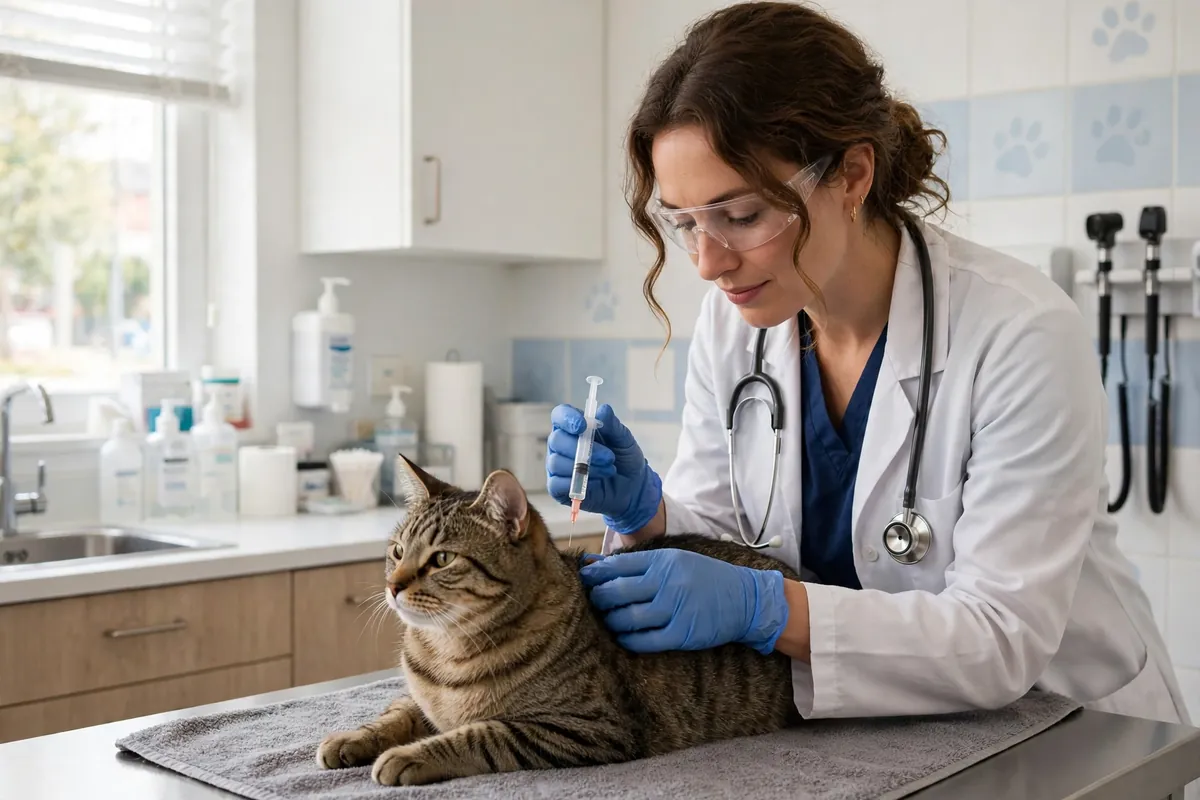
Puppies and kittens need their core vaccines as a series — typically at 8, 12 and 16 weeks — because maternal antibodies interfere with single early doses. Budget the series as a package ($150–$300 in vaccine costs plus the exam fees) rather than being surprised three times. Adults then settle into boosters every one to three years depending on the vaccine, which is why routine vet care in our calculators runs $175–$450 a year rather than the first year’s higher figure.
Spay and neuter: the surgery everyone asks about
Spaying (removing the ovaries and usually the uterus of a female) is a bigger operation than neutering a male, and prices reflect that — as does the animal’s weight, because anaesthesia and medication are dosed by the kilo.
| Procedure | Private clinic | Low-cost programme |
|---|---|---|
| Cat neuter (male) | $100 – $250 | $50 – $100 |
| Cat spay (female) | $150 – $350 | $75 – $150 |
| Dog neuter — small / medium / large | $200 – $400 / $250 – $475 / $300 – $600 | $75 – $200 |
| Dog spay — small / medium / large | $250 – $450 / $300 – $550 / $375 – $700 | $100 – $250 |
Shelters frequently include the surgery in the adoption fee, which is one reason adoption is such good economics. Low-cost spay/neuter programmes — run by humane societies, vet schools and mobile clinics — do the same surgery at a fraction of private prices and are a legitimate, quality option; the trade-off is usually a longer wait and fewer frills like overnight monitoring. What you should not do is skip the surgery to save money: an unplanned litter costs far more than the operation, and unspayed females carry real risks of pyometra, a life-threatening uterine infection whose emergency treatment runs $1,500–$4,000.
The middle layer: common non-emergency problems
Between routine care and catastrophe sits the layer that actually fills most vet diaries. Ear infections in dogs: $150–$350 with cytology and medication. Skin allergies: $200–$600 to work up, then often $40–$100 a month to manage. A dental with extractions: $800–$1,800. Arthritis management in a senior dog: $30–$80 a month, indefinitely. A cat’s urinary issue caught early: $250–$600; the same issue as a full blockage at midnight: $1,500–$4,000. The pattern to notice is that nearly every condition is cheapest at its first appointment — early care is not just kinder, it’s a discount.
The emergency layer: why the fund exists
Emergency and specialty hospitals price differently because they staff differently: overnight teams, ICU monitoring, on-site imaging and surgeons. Representative 2025 figures: foreign-body surgery $1,500–$3,500; cruciate (CCL) surgery $3,500–$6,000 per knee; fracture repair $2,500–$5,000; bloat (GDV) surgery $3,000–$7,500; a weekend of hospitalisation for pancreatitis $2,000–$4,500; cancer treatment $5,000–$15,000 and up. Nobody budgets these into a “typical year” — our calculators deliberately exclude them — but roughly a third of pets need an unplanned visit annually, so every owner needs either insurance or savings standing behind the routine budget. Our emergency fund guide builds that cushion step by step, and the insurance breakdown compares the alternative honestly.
How to keep vet costs down without gambling
Keep the check-ups — they are the cheapest insurance you can buy, because they convert $3,000 problems into $300 ones. Keep prevention current; heartworm treatment costs $1,000–$1,500 and months of cage rest, against roughly $10 a month of prevention. Keep teeth and weight in check, the two slow-motion budget killers. Ask for written estimates and about payment timing before treatment, not after — clinics would rather discuss money upfront than surprise you. And price-shop the routine layer freely (vaccines and exams vary widely between clinics) while understanding that emergency care is bought wherever you are when it happens.
Finally, fold the routine layer into a monthly number so none of this arrives as a lump. Our monthly pet budget calculator includes a vet reserve line for exactly this purpose — $45 a month quietly set aside turns the March vet visit from a crisis into a formality.
Prices are 2025 US ranges from published fee surveys and clinic listings; your clinic’s prices will vary. PawCosts provides cost guidance only — for medical decisions, your veterinarian is the authority, not a calculator.